Making Skills Visible – Integrating Client Competence into Turku’s Service Ecosystem
In everyday employment services, the same challenge appears repeatedly: clients have skills and experience, but these are not easily identifiable, comparable, or usable in service guidance.
The legally mandated client information systems currently in use do not sufficiently support this work to the extent required by the City of Turku’s employment services. For example, clients cannot independently update or refine the information they have provided to authorities—information that experts rely on when identifying suitable job opportunities.
This gap led to the launch of the Työprofiili+ pilot, implemented in collaboration between Turku Employment Services and NeduAI.
Pilot Objectives
The goal of the pilot was to test whether AI-assisted solutions could:
- support clients in describing their own skills
- enable the creation of a structured skills profile even without a complete CV
- target service and training recommendations more precisely
- integrate the solution seamlessly into the City of Turku’s existing service ecosystem
A key requirement was that the solution should help jobseekers better understand their own competence and provide AI-based support when preparing job applications and CVs for available positions.
Pilot Implementation
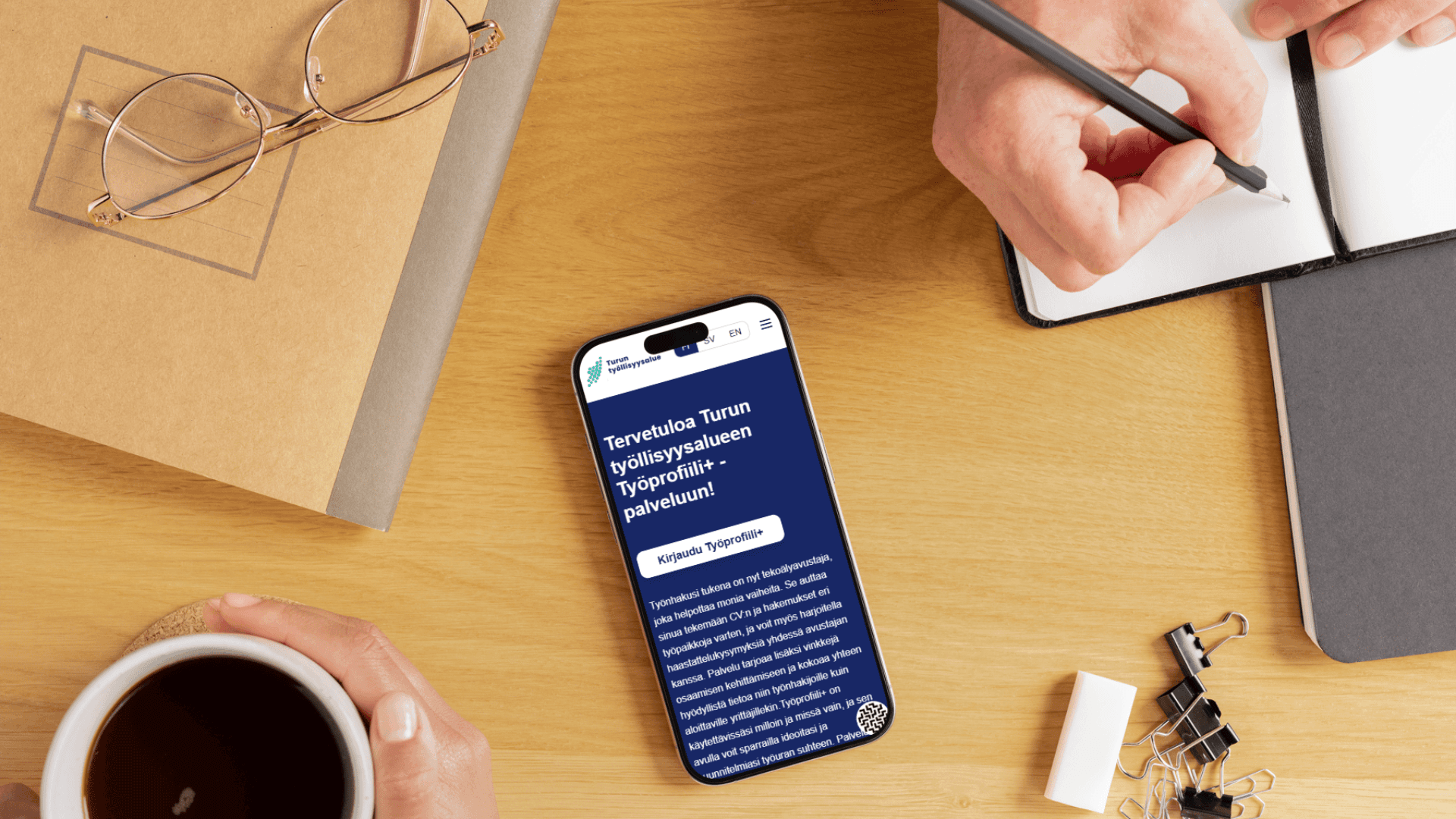
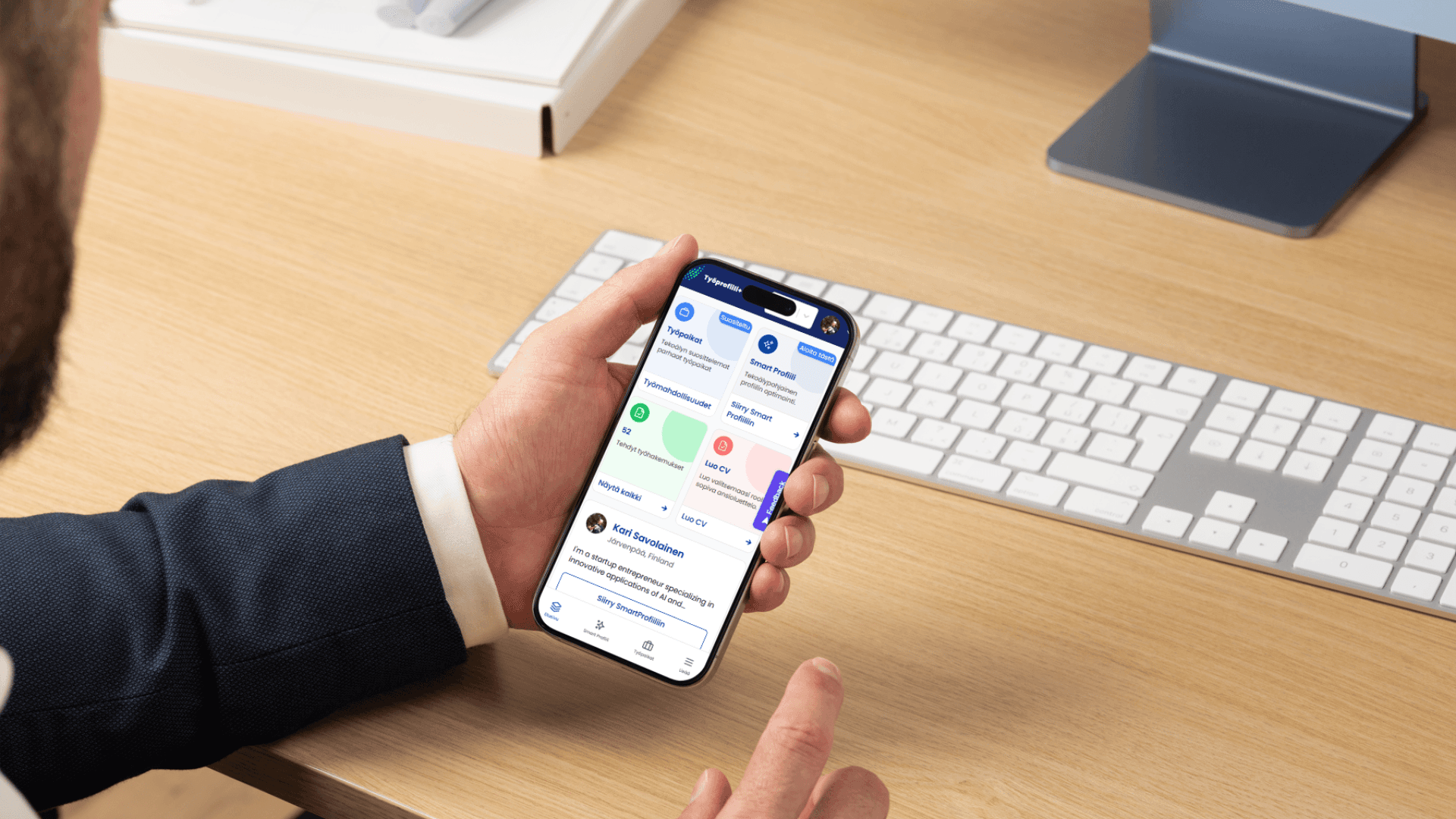
During the pilot, Työprofiili+ was customized as a branded solution tailored specifically for Turku Employment Services.
In practice, this included:
- designing the user journey as part of Turku’s existing digital services
- dedicated landing pages presenting core functionalities and FAQs in Finnish, Swedish, and English
- visual adaptation of the user interface to align with Turku’s service identity
- limiting visible quick actions to ensure focus on employment and skills development
From the user’s perspective, the service appeared as Turku’s own digital solution—not as an external system.
What Was Tested in the Pilot?
The pilot focused on four main areas:
- Smart Profiling
Clients independently built their skills profiles with AI guidance. - Self-Directed Profile Creation
Clients described their competence without direct expert support. - Automated Job and Training Suggestions
AI connected skills profiles to open job listings and education opportunities via Työmarkkinatori, Jobly, and Opintopolku. - AI-Assisted Training Recommendations and Job Profile Analysis (Q1/2026)
Users received a clear, understandable overview of potential next steps.
Key Findings from the Pilot
Two central insights emerged:
- With proper guidance, clients can independently describe their skills accurately and meaningfully.
AI functioned as support for articulation—not as an evaluator. - Structured skills data significantly improved service targeting.
When competence was clearly structured, job recommendations became more relevant. The pilot also reinforced the understanding that once skills are modeled correctly, they can be reused across multiple processes.

From Pilot to Next Steps
The pilot also raised new questions:
- How can skills be systematically compared to career goals?
- How can expert work be supported when the number of profiles grows?
Based on these observations, initial MVP versions were developed for:
- AI-based profile analysis (comparing skills with career objectives)
- AI Assistant Pro (supporting expert work in the administrative view)
These innovations were not part of the pilot itself, but their need became evident during its execution.
Conclusions from the Pilot
From the pilot perspective, Työprofiili+ demonstrated that:
- AI can effectively support clients in articulating their skills
- solutions should be branded and integrated as seamlessly as possible into existing service ecosystems
- structured skills data improves the quality of job matching
- the solution scales without a proportional increase in expert workload
The pilot has provided NeduAI and Turku Employment Services with a concrete view of how digital and AI-assisted services can be responsibly and effectively integrated into public services.